
Grub & Beetle Control

3 products
3 products
Sort by:

NOW WITH FREE SHIPPING ON ALL 10 lb. PACK SIZES!! (Excludes 40 lb. Bags)
Due to state regulations beyond our control, we can not ship to: AK, AR, LA, NM, NV, UT.
We can not ship to Canada.
OMRI-Listed For Organic Production
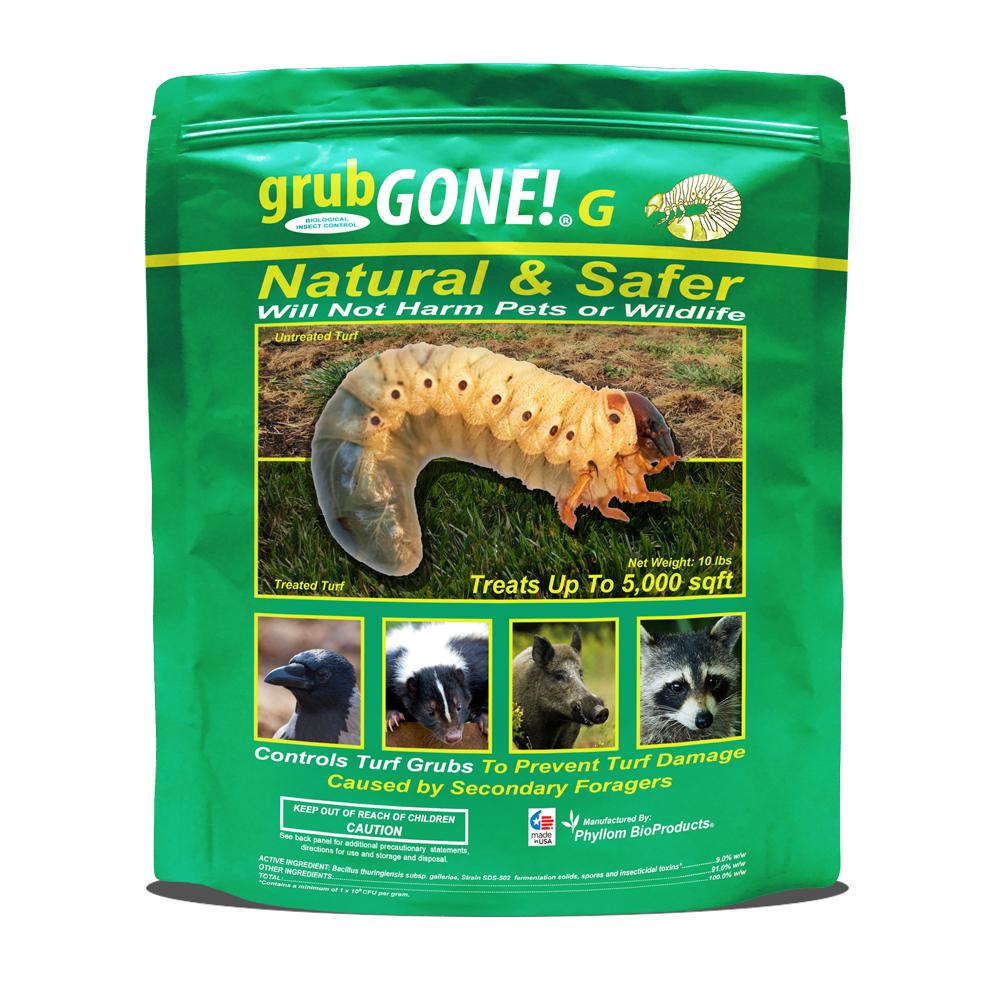
grubGONE! Scientific Studies and University Validation
- Ohio Turfgrass Foundation Magazine - grubGONE! as a New Organic Option for Insect Control On Sports Fields.
- A strain of Bacillus thuringiensis subsp. galleriae containing a novel cry8 gene highly toxic to Anomala cuprea (Coleoptera: Scarabaeidae).
How grubGONE! Delivers Better Results Than Milky Spore
grubGONE! has the broadest range of effectiveness against grubs in the non-synthetic market, and does it without harming beneficial insects! Milky Spore is only effective against Japanese Beetle grubs; grubGONE! has a much broader spectrum of control against white grubs including not only Japanese Beetle grubs but also Asian and Oriental Beetle grubs as well as many chafers (such as the European) and borers.
Even more, grubGONE! is also effective against adult beetles as well as all stages of grubs (1st through 3rd instar stages) - Milky Spore is not. You get a more complete protection with grubGONE!
grubGONE! is composed of the natural soil bacterium Bacillus thuringiensis galleriae (Btg) but more the stable protein the microbe makes that is toxic to only grubs. It is therefore not dependent on the finicky conditions required for the bacterium to live like Milky Spore. grubGONE! is stable for years and is effective at any temperature range grubs are feeding. Milky Spore has a limited temperature range to work. In soils in the northeastern United States and some other parts of the country, the Milky Spore bacteria do not survive in the soil for extended periods, contrary to claims otherwise (see references below).
- University of New Hampshire: " The milky spore bacterium is not effective in northern New England because spring soils are too cold. “
- University of Connecticut: "Milky Spore has not been very successful in controlling white grubs."
- Cornell University: Does Milky Spore Work? "The overall effect of Milky Disease is as a population suppressant, not as a direct control."
Application Timing for grubGONE!
* See below for more detailed application instructions.
In bulk or professional sizes, grubGONE! is now at a similar cost to apply per 1,000 sq. ft. as Acelepryn®!! Quickly and easily get professional pricing by CLICKING HERE on our wholesale website to either set up (once approved) or log into your professional account.

NOW WITH FREE SHIPPING ON ALL SIZES!!!
SHIPS THE SAME OR NEXT BUSINESS DAY
DUE TO STATE REGULATIONS BEYOND OUR CONTROL, WE ARE UNABLE TO SHIP THIS TO THE FOLLOWING STATES: AK, LA, NM, NV, UT.
We can not ship to Canada.
Shelf stable for at least 3 years!
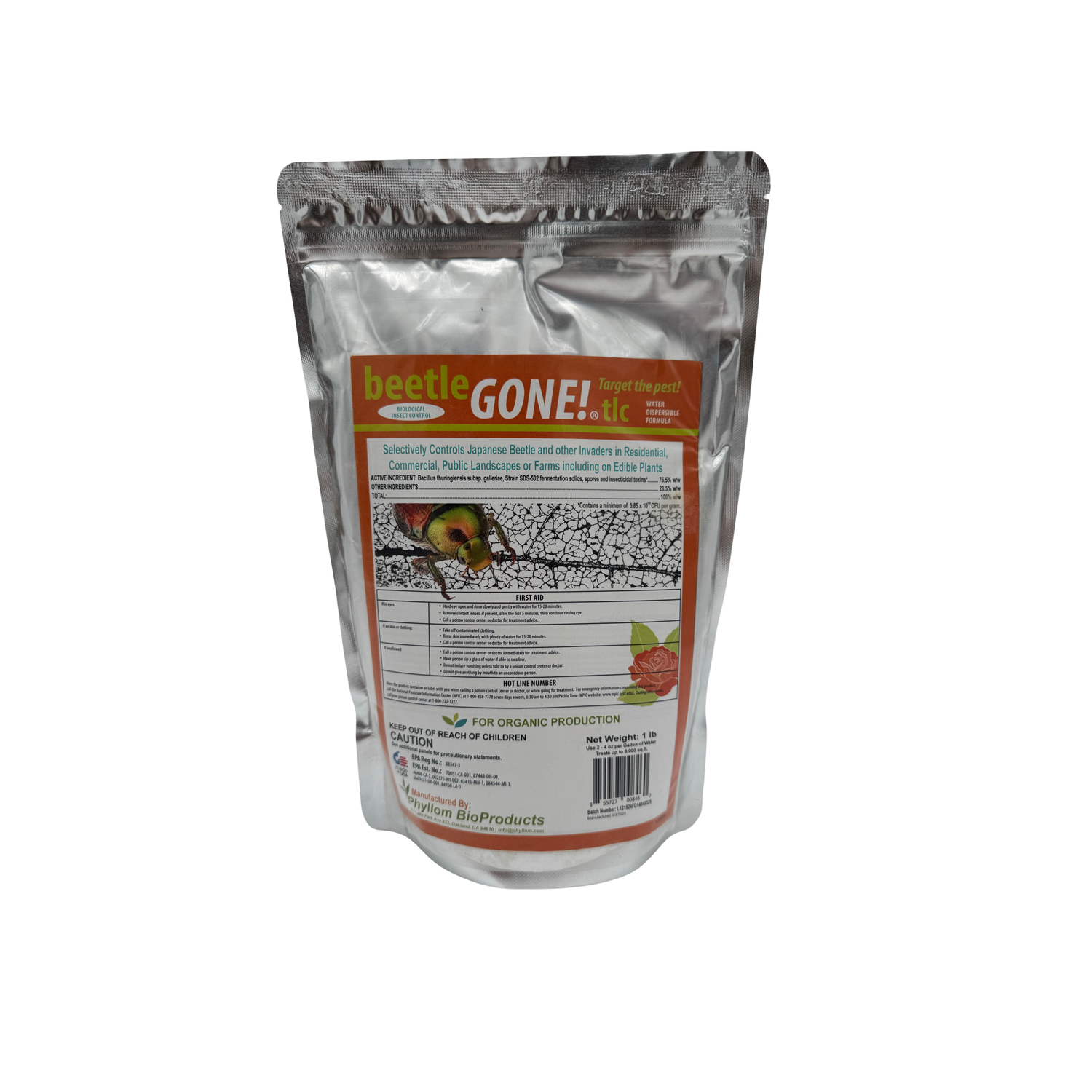
beetleGONE!® is the first Bacillus thuringiensis galleriae (Btg) bio-insecticide to control adult scarab beetles (plus the larvae or turf grubs) at a level of efficacy equivalent to chemical standards; but without the side effects or off-target damage to beneficial insects and pollinators. With beetleGONE!, entire landscapes or crops can be economically, effectively and safely protected from destructive beetle pests such as Japanese, Asiatic, June and Oriental Beetles as well as European, Cupreous, Southern and Northern Masked Chafers. Unlike other biological or chemical grub-control products, beetleGONE can be used as a curative treatment for grub control as well as a preventative treatment.
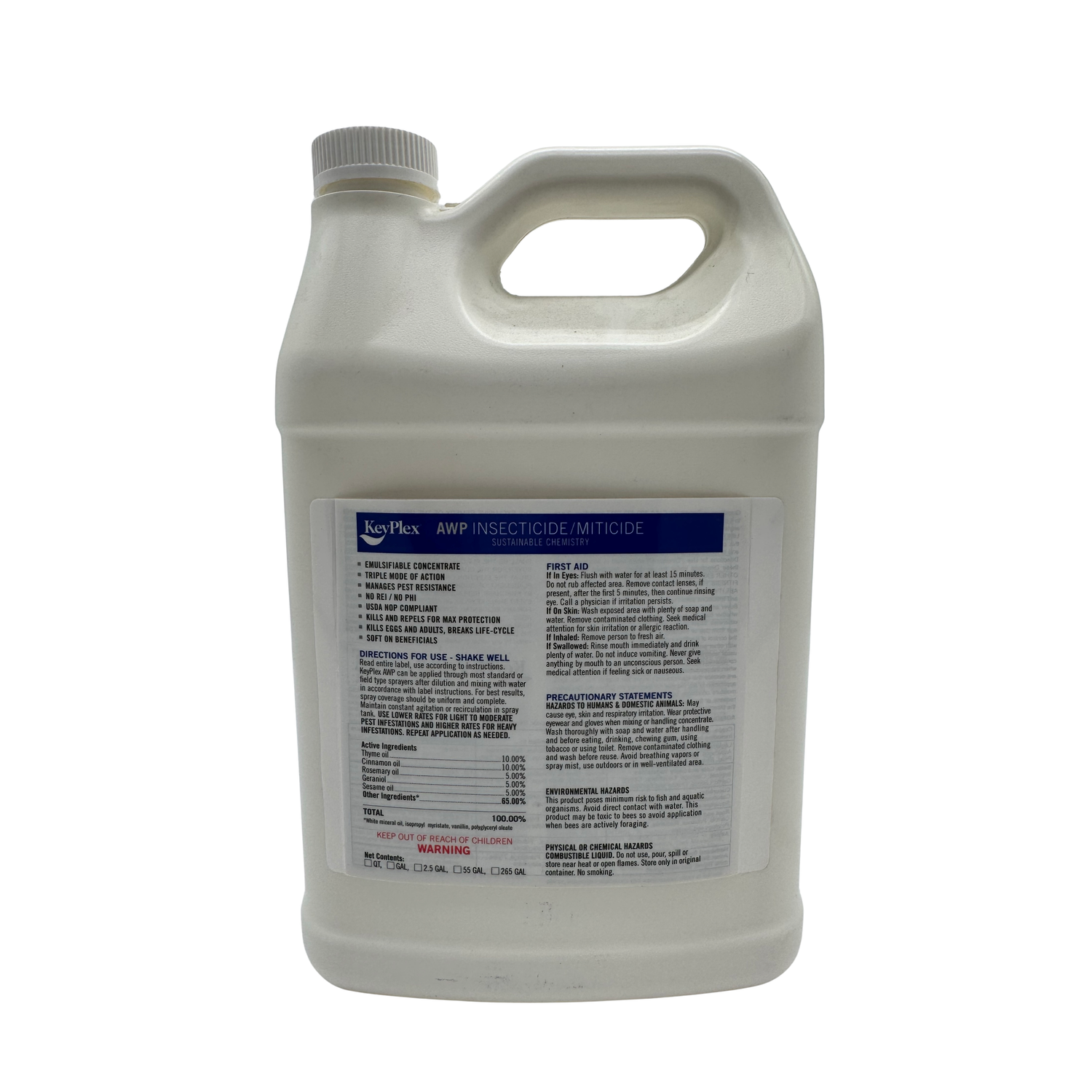

KeyPlex AWP is the New & Improved Substitute for KeyPlex EcoTrol
KeyPlex AWP is a natural mite and insect killing agent effective against larvae, nymphs, eggs, and even certain adult pests. AWP controls insects such as (but not limited to) naval orange worms, codling moth, aphids, thrips, whiteflies, mites and other plant, tree and turf pests. It can even be used to repel invasive beetles! AWP is made from all natural oils and has no Re-Entry (REI) or Pre-Harvest (PHI) Restrictions and is USDA NOP Compliant.
AWP works by attacking insects' movement, heart rate, behavior, and metabolism, causing signs of toxicity in the insect.
